I am a scholar activist who bridges decolonial theory with on‑the-ground pedagogical innovation. I don’t only provide critique but also design actionable curriculum interventions (e.g., in architecture, media) that challenge institutional norms.
I emphasize co-creation and participation through working on student–staff partnerships. I model how transformation can be genuinely participatory, not top-down. Through facilitating co-creation processes, I build capacity for collaborative governance of curricula.
I foreground emotional and relational change in my academic workshops and journal articles by exploring the emotional and relational dimensions of transformation. Decolonial work involves not only structural change, but also healing, dialogue, and relational re-formation.
I engage publicly on all these topics through my media analysis, public speaking, and thought leadership. I amplify debates on race, diversity, and decolonisation, so that these topics are not left out of academic and public discourse.
My work has been engaged with in multiple global institutions from CPUT to the University of Sussex and has supported others to think through and implement systemic change in policies, curricula, and practices toward greater social justice.
I have participated in various research projects that inspired my past and current work inside and outside of the academic space.
Curriculum Development & Decolonisation
I facilitated a Co-creating Curricula across Difference course via Cape Higher Education Consortium (CHEC) with fellow academics that focused on how to work with different partners from students, communities and other social justice partners in curriculum development, across three universities.
Through the Designing for Social Justice (DSJP) project, I have coached and facilitated student – team partnership teams and conducted research on what Global South, ubuntu inspired student–staff partnerships could look like.
I am constantly reflecting about my work and its impact in conferences, presentations and articles. The latest reflection piece was done for decolonial reading group – Reading Decoloniality based at Warwick University where I am also a co-editor.
I have written and reflected on the role of scholar – activists in the opinion piece for Sociology Review titled Understanding the Politics of Representation. I collaborated with a fellow social activist and we wrote a piece reflecting on our individual and shared experiences of the politics of representation and how we have navigated power and power differences and inequality within activist different movements.
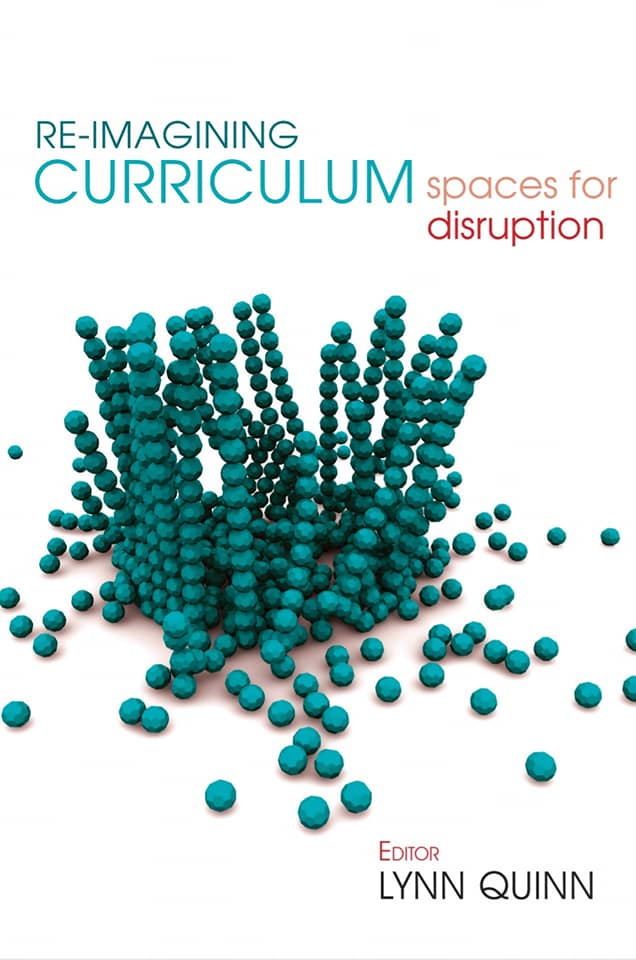
In 2019, I was first author on a book chapter on advancing democratic values in higher education through open curriculum co-creation. In the chapter we reflected on our experiences co-creating with students and the ways in which university structures are not enabling for student voices and do not enable their full participation in curriculum development processes. Students therefore become confined to being merely recipients of knowledge, on the periphery of knowledge creation.
This was the first student staff partnership research project I was principal investigator on. The focus of the research was on understanding what is required to build projects where students are truly partners in curriculum development with academics.
In the student – staff partnership project – we argued that education is a political project – a means to empower and conscientise oppressed groups of people. We argued further that this SSP projects can only be transformative if all actors involved (lecturers, students, management, community practitioners and employers) use their agency in collaboration within and beyond institutional structures.
14 November 2019, Re-Imagining Curriculum: Spaces for Disruption (Chapter 16: Advancing Democratic Values in Higher Education through Open Curriculum Co-creation towards an epistemology of uncertainty.

In Debunking the apartheid spatial grid, I reflected on my work as a diversity expert developing and supporting curriculum interventions. The article focused on my experiences implementing a curriculum intervention in the architecture department of a university of technology. In the academic article I reflect on how a curriculum intervention was implemented in the architecture course of a university of technology in South Africa. I reflect on how curriculum change is not a small undertaking that can be done overnight, it requires thinking and planning for it to be successful. The reflections also provide a glimpse into the process of developing a curriculum intervention and show what cultures and institutions need to be challenged for successful interventions in the curriculum.
10 February 2021, Debunking the Apartheid Spatial Grid: Developing a Socially Just Architecture Curriculum at a University of Technology
The architecture curriculum intervention project’s main aim was to help students understand South African segregation of communities by race in the past and its implications for segregated communities today. The project further drew on Springray and Truman (2017) walking methodologies where walking becomes ‘thinking-in-movement’. The walking lectures in each neighborhood combined historical content, knowledge sharing about architecture forms in different neighbourhoods and local knowledge from at least one resident in each neighbourhood. This format provided students with the opportunity to think through their course content, relate it to the real world and ask questions where they were not clear. Although students regularly walk in urban spaces around the city, they rarely get an opportunity to learn about the history behind the architecture and design they interact with. This is important as South Africa undergoes rapid urbanisation where built environment practitioners are constantly called upon to think through solutions for challenges like informal settlements and other emerging challenges in urbanisation.
Journal Articles
My journal articles also focus on my experiences as a media academic seeking to decolonise my journalism curriculum.
In Crossing New Borders as an Academic, I collaborated with two academics from different institutions and disciplines and produced a reflexive narrative where we explored our journeys of curriculum transformation. I engage my journey as a media academic at the height of the #Rhodesmustfall and #Feesmustfall movement in South Africa. In my reflections, I tell my story of my attempts to transcend limitations and separations between people, knowledge and curricula. I also explore decoloniality in curriculum development and pedagogical change.
20 June 2020, Crossing Borders as ‘New’ Academics in Contested Times: Reflexive Narratives of Curriculum Change and Transformation Critical Studies in Teaching and Learning, CRISTAL
In Dreaming up a New Grid, I reflected on building curriculum interventions as a media academic with my co-author who was the academic developer that supported me through this process. In this article we engage the various ways in which affective and embodied learning can be implemented in South African classrooms. We also explore the use and usefulness of apartheid categories when analysing society and societal behaviour and teaching students about South Africa’s painful, racially divided past. We also examine the process of learning and unlearning in a political reporting class when we collaborate as a lecturer and an academic staff developer to develop a curriculum intervention to help students understand racially biased voting in South Africa and its historical origins. This an auto-ethnographic paper with reflections on teaching practice and the tensions and dilemmas that arise when introducing a specific pedagogic intervention like the Privilege Walk to help students understand privilege as systemic, intersectional and historically rooted. We reflect on the use of this exercise and the responses by students and trace our journey in engaging and disrupting identity politics by developing a decolonising pedagogical approach that emphasises post-apartheid identity as fluid and becoming.
26 September 2016, Education as Change 21(2):187-207 (Dreaming up a new grid: Two lecturers’ reflections on challenging traditional notions of identity and privilege in a South African classroom)
Publications
- 26 September 2016, Education as Change 21(2):187-207, January 2017, Dreaming up a new grid: Two lecturers’ reflections on challenging traditional notions of identity and privilege in a South African classroom
- 15 August 2019, Sociology Review. Understanding The Politics Of Representation in Practice: Two Reflections on Positionality in Movements for Change
- 14 November 2019, Re-Imagining Curriculum: Spaces for Disruption (Chapter 16: Advancing Democratic Values in Higher Education through Open Curriculum Co-creation towards an epistemology of uncertainty.
- 20 June 2020, Crossing Borders as ‘New’ Academics in Contested Times: Reflexive Narratives of Curriculum Change and Transformation Critical Studies in Teaching and Learning, CRISTAL
- 10 February 2021, Debunking the Apartheid Spatial Grid: Developing a Socially Just Architecture Curriculum at a University of Technology

You must be logged in to post a comment.